You're planning a Japanese-themed party and you're wondering How much sushi per person? What to expect? For a complete meal, allow on average 12 to 16 pieces per adult. Plan ahead 6 to 10 pieces for a child, 4 to 6 rooms for an entrance and up to 18 to 20 pieces for a big eater. However, these quantities should be adjusted according to the size of the bites, the recipes chosen and the accompaniments served.
To ensure you have everything you need without too much preparation, start with an average portion size and then add a little extra. Here are some guidelines for calculating the number of sushi rolls, rolls, and rice you'll need.
How many sushi pieces should I plan for per person?
For a dinner or lunch where sushi is the main course, a good average is 14 pieces per person. This base is suitable for a varied platter of maki, California rolls, and a few nigiri. If your guests have hearty appetites, or if the meal doesn't include a starter or substantial side dish, opt for 16 to 18 pieces.
| Situation | Recommended quantity per person |
|---|---|
| Appetizer with other bite-sized snacks | 4 to 6 pieces |
| Entrance | 4 to 6 pieces |
| Full meal for one adult | 12 to 16 pieces |
| Complete meal for a child | 6 to 10 pieces |
| Teenager or big eater | 16 to 20 pieces |
| Buffet where sushi is the main dish | 15 to 18 pieces |
These figures are guidelines, as not all pieces are the same size. A small cucumber hosomaki is easier to eat than a large filled California roll. A generously filled temaki is also equivalent to several small bites.
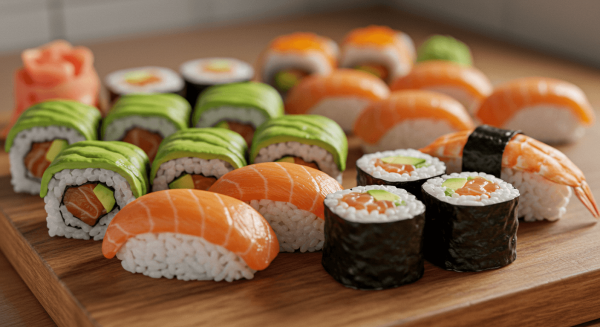
For a balanced assortment of 14 pieces per adult, you could plan, for example:
- 6 salmon or tuna maki rolls; ;
- 4 California rolls; ;
- 2 vegetarian maki rolls; ;
- 2 nigiris.
At home, a roll usually gives 6 to 8 pieces, depending on its length and the thickness of the cut. Therefore, you should allow approximately two rolls per adult, or two and a half rolls for those with a bigger appetite. If you're a beginner, our video dedicated to the preparing a traditional maki shows you how to get a regular roll that's easy to cut.
How many sushi for 2, 4, 6, 8 or 10 people?
Assuming an average of 14 to 16 pieces per adult, here is the total number to prepare for a complete meal:
| Number of people | Recommended quantity |
|---|---|
| 2 people | 28 to 32 pieces |
| 4 people | 56 to 64 pieces |
| 6 people | 84 to 96 pieces |
| 8 people | 112 to 128 pieces |
| 10 people | 140 to 160 pieces |
With a group whose appetite you don't know well, add approximately 10 % margin. For six people, you can aim for around a hundred pieces. It's better to offer an additional recipe than to prepare an excessive quantity of just one type.
How to adjust the quantity to the meal and the number of guests?
The number of sushi per person depends primarily on their place in the menu. For an appetizer that also includes gyoza, skewers, chips, or vegetables, four to six pieces are sufficient. If sushi is the main course of a cocktail party, plan on eight to twelve pieces per person.
For an appetizer, stick to around four to six pieces. The goal is to introduce several flavors without filling guests up before the rest of the meal. An assortment of two maki rolls, two California rolls, and one nigiri works very well.
As part of a complete meal, side dishes have a significant impact. Miso soup, coleslaw, edamame, or a few gyozas can help reduce the portion size to 10 or 12 pieces per adult. Without any accompaniments, keep the fork of 12 to 16 pieces.
For a young child, start with six small pieces with simple fillings. An older child can eat eight to ten, while a teenager will often eat as much as an adult.
The quantity also varies depending on the type of sushi.
Not all sushi is equally filling. To determine your portion sizes more precisely, use the following guidelines:
- Classic Makis: 12 to 16 pieces for a meal consisting solely of maki, or about two rolls per adult.
- California rolls or uramakis: 10 to 14 pieces, as they are often larger and more generously filled.
- Nigiris: 8 to 12 pieces, their portion of rice and their slice of fish being larger.
- Temakis: 2 to 3 cones per person depending on their size.
- Sashimi: 10 to 15 slices if they are the main course, accompanied by rice and vegetables. Sashimi does not contain rice and is not, strictly speaking, sushi.
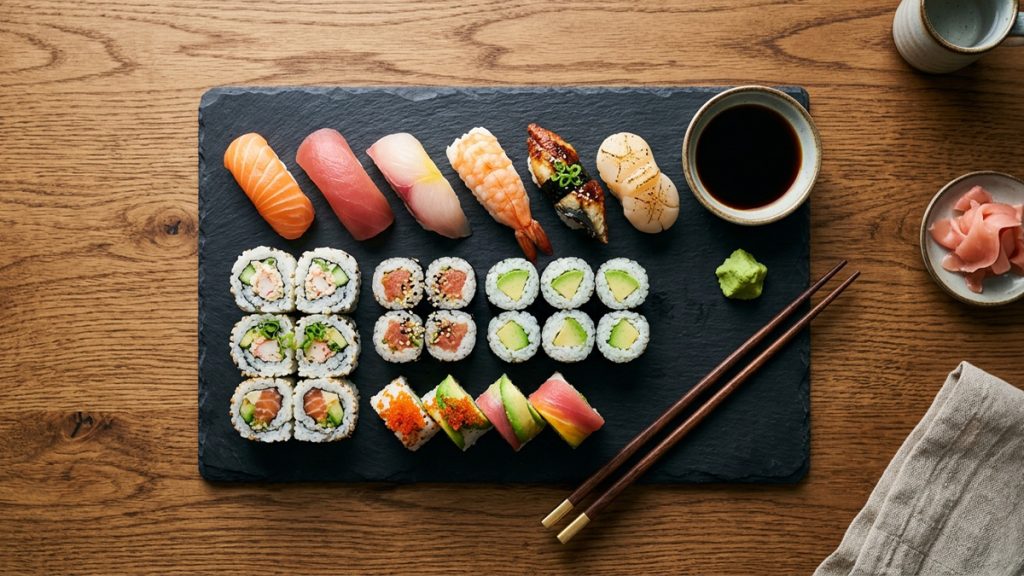
If you're mixing different sizes, avoid adding up the full portions of each type. Think in terms of assortment: six maki, four California rolls, and two nigiri already make a fairly generous twelve-piece meal. To easily vary the fillings, you can take inspiration from our tuna maki recipe and our California maki recipe with surimi.
How much rice and other ingredients should I allow per person?
For homemade sushi served as a main course, expect to pay approximately 75 to 100 g of uncooked rice per adult. This quantity corresponds roughly to 180 to 250 g of cooked and seasoned rice, depending on the variety used and its absorption. For a child, 40 to 60 g of uncooked rice is generally sufficient.
OUR sushi rice recipe Use 300g of rice for three to four people. This is a practical base to multiply according to the number of guests:
| Number of people | Raw rice should be provided |
|---|---|
| 2 people | 150 to 200 g |
| 4 people | 300 to 400 g |
| 6 people | 450 to 600 g |
| 8 people | 600 to 800 g |
| 10 people | 750 g to 1 kg |
A layer of rice that's too thick makes the rolls difficult to close and hides the filling. Spread a thin, even layer, leaving a small border free.
For the filling, allow approximately 60 to 100g of fish, seafood or plant-based alternative per adult When you're mainly preparing maki rolls, you can add avocado, cucumber, carrot, cream cheese, or tofu. For four people, six to eight sheets of nori are generally a good base if each roll is cut into eight pieces.
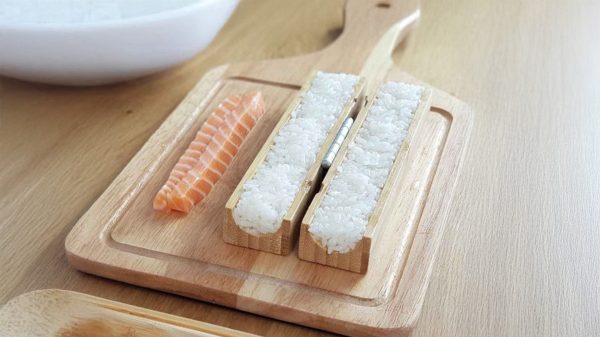
Prepare the rice well in advance so that it can cool to room temperature before shaping, without refrigerating it, where it will harden. To save time and form uniform rolls, the’Easy Sushi® 3.5 allows you to easily make makis containing two to three ingredients.
How to put together a sushi platter without missing anything or wasting anything?
The best seafood platter offers, above all, a variety suited to your guests. Check if any of them don't eat raw fish, are vegetarian, or have an allergy. Include at least one cooked dish and one vegetarian option: cucumber and sesame, avocado and cream cheese, crunchy vegetables, cooked tuna, or surimi.
Start by calculating 14 pieces per adult and 8 per child. Divide this total among three or four recipes, then add 10 (%) if the meal is long or if you're hosting hearty eaters. However, don't include this extra allowance if you're serving several substantial side dishes.
Prepare the most popular recipes first, then the more unusual combinations. It's also best to cut the rolls into pieces of the same width: this will help you control the final number and make the platter look neater. Place the vegetarian pieces separately to avoid any contact with the fish.
What to do with leftover sushi?
Dishes containing raw fish should be eaten quickly and kept refrigerated until serving. To minimize waste, prepare the ingredients in advance without necessarily rolling everything: you can make an extra roll if needed.
Vegetarian maki or maki with cooked ingredients can be kept more easily until the next day in an airtight container in the refrigerator, although their rice will lose some of its softness.
In summary, remember 12 to 16 sushi pieces per adult for a meal, 6 to 10 for a child and 4 to 6 for a starter. Allow two rolls per adult, 75 to 100g of uncooked rice per person, and a maximum margin of 10. All that's left is for you to choose your fillings from all our... Sushi and maki recipes and to enjoy a home-cooked meal that is both generous and well-balanced.