
What fish is best for making perfect sushi and maki?
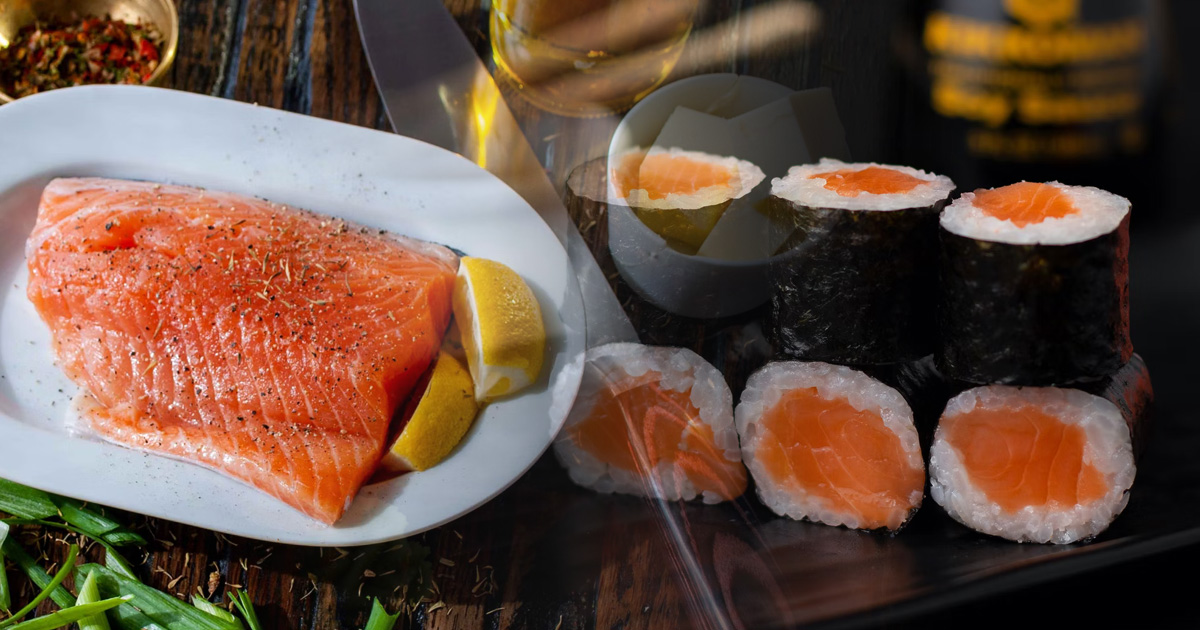
Almost all fish and other marine creatures are edible, but not all are safe to eat raw. Raw fish has been fashionable in the West for some time, but sushi and sashimi have been part of Japanese cuisine for centuries. When preparing either at home, it's best to follow their example to know which fish you can safely eat raw.
Please note that certain high-risk populations should avoid raw seafood. These include people with weakened immune systems, pregnant women, children under five years of age, and adults over 65 years of age.
Sushi sea bass fish
For any raw dish, you'll find it's best to stick to the fish you'd find in a sushi bar (sushi-ya, as they're called in Japan). This can be a problem if you've never eaten at a sushi bar before. Let's start with the classic raw fish found in Japanese sushi-ya:
- Tuna: any tuna, including bluefin tuna, yellowfin tuna, bigeye tuna, skipjack tuna, bonito, and albacore. There are also some rarer tuna species.
- Salmon: Although popular and commonly used for sushi, this particular fish carries a risk of parasites. Be sure to freeze it beforehand.
- Clams, scallops, and abalone: these shellfish are quite popular options. However, you should avoid oysters. While they are delicious raw, oysters don't pair well with sushi rice.
- Amberjack: This is a type of jack called hamachi in Japanese. For many people, it is a favorite raw fish.
- Halibut or flounder: The English names for these fish may not appear on a sushi menu. In sushi terminology, they are called hirame.
- Squid: although common in sushi, squid is usually cooked quickly for a few seconds rather than being served raw.
- Shad with gizzard: this baitfish, which the Japanese call kohada, is highly regarded in certain circles. Although it has a very strong fishy taste, this is not in a bad way.
- Mackerel: called saba or aji in Japanese, all forms of mackerel are excellent choices. They are always treated with vinegar before serving.
- Sea bass, pork, and snapper: These are all fish that resemble sea bass, and they are often seen in sushi restaurants under the names tai and suzuki. They too are often prepared before being served raw.
For added safety, look for farmed fish from the United States, Norway, Great Britain, New Zealand, Canada, or Japan. These countries have strict hygiene standards. That said, farmed salmon is susceptible to a type of parasite called sea lice, regardless of the country where it is raised.
Potential parasites
Parasites are a part of life when you eat meat. This is one of the reasons humans decided to start cooking their food thousands of years ago. Heat kills worms. Freezing does too, but some can survive in a home freezer (though not in a good freezer box).
That's why it's recommended that any seafood you plan to eat raw be frozen beforehand. It's simply safer that way. Yes, fresh is better in most cases, but even professional sushi chefs freeze their salmon first, as it's exceptionally susceptible to parasites.
The creatures you need to be concerned about are the cod worm, the seal worm, and the tapeworm.
Cod worms are found in cod, haddock, pollock, and hake. They are easily visible to the naked eye and are easily removed if you catch them. Good fishmongers in New England "candle-test" their fish by placing the fillets on a light box to detect worms. This is why you never see cod in a sushi bar.
Seal worms are found in salmon, mackerel, Pacific rockfish, smelt, some halibut, and other plaice, including shad on the west coast. This is why mackerel is pickled in vinegar when preparing sushi. These worms are small, brown creatures that coil up like a spring. You might miss them if you're not looking closely, but if you do—and you should always look closely with smelt and herring—you can spot them.
Neither cod nor seal worms will kill you. If you eat one, it will usually pass through your system without you realizing it. Sometimes, they will manage to attach themselves to your stomach, causing nausea and abdominal pain. They will die soon enough, but not before causing unpleasantness.
Tapeworms are far more dangerous. They live in so many freshwater fish that only a fool would think of eating a raw wild trout or largemouth bass. Tapeworms can live inside people and can grow up to 6 meters long inside you. Yikes! Unless it's farm-raised, avoid walleye sashimi.
Freshness
Freshness is another key factor in the consumption of raw fish. Fish that hasn't been properly handled upon arrival at the dock won't be good fish to eat raw.
Sushi-quality fish are caught quickly, bled immediately after capture, gutted soon after, and carefully iced. This method is crucial. A piece of fish can be perfectly fine cooked but very unpalatable raw. Cooking kills many bacteria and other organisms that begin to accumulate in raw fish after it dies.
If you catch fish yourself and want to eat it raw, remember which fish you can eat this way from the list above. It's not exhaustive, but it's a good guide.
If you catch a fish like that, do as the pros do:
- Bleed it by slicing through the gills and/or cutting a slice near the tail down to the spine.
- Gut the fish on the boat. Most of the worms found in fish once lived in the animal's viscera, then migrated to the flesh after the fish died.
- Rapid evisceration avoids this phenomenon in most cases.
- Bring ice on the boat, even in cold weather. Buy several pounds of ice, then buy an extra bag. You'll see it's worth it.
- Eating raw fish is a wonderful way to enjoy seafood, and many people (from low-risk populations) eat it regularly without any problems. It is essential to know how to choose and handle seafood safely.