
When sushi preparation meets sea bass excellence
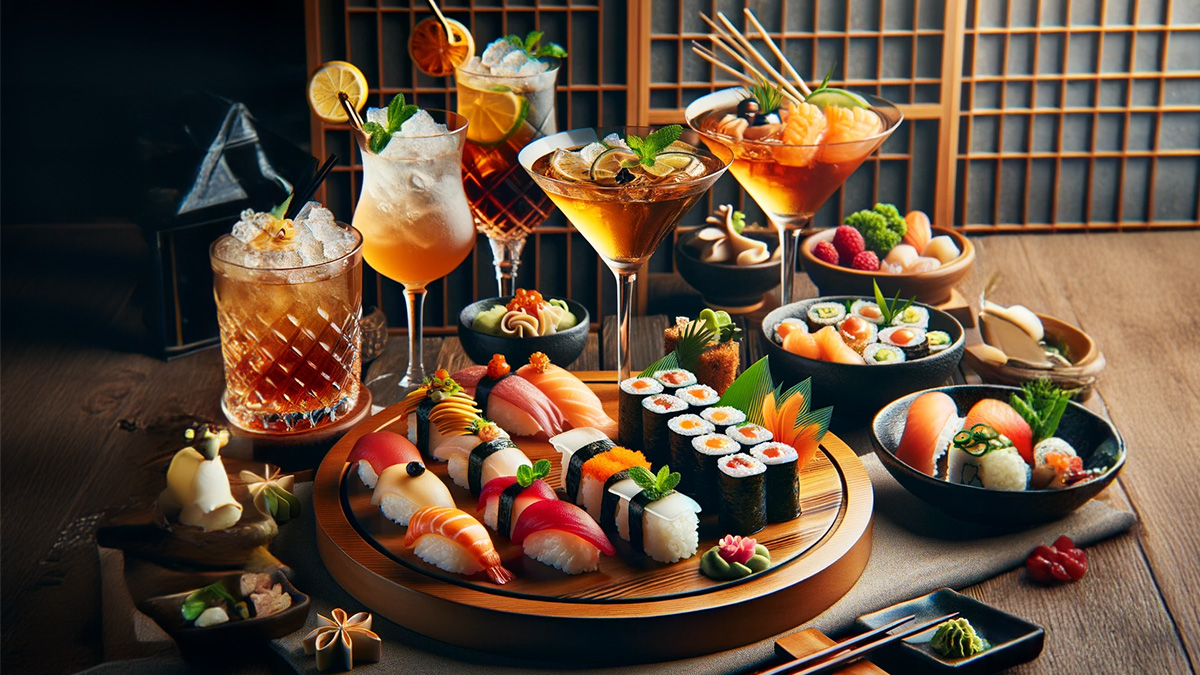
Culinary art and mixology are two worlds where expertise, creativity, and precision are essential. In a ballet of flavors, textures, and aromas, sushi chefs and mixologists transform their workspaces into veritable stages of artistic expression. This convergence of culinary arts and mixology creates unique sensory experiences that enchant gourmets worldwide.
1 – The elegance of simplicity in the art of sushi
Preparing sushi is an art form that prioritizes purity and simplicity. Far from being simple, this cuisine requires a deep understanding and meticulous attention to detail. The sushi chef must master the delicate balance between rice, fish, and seasonings. Every element must be perfect, every bite a celebration of natural flavors. The quality of the ingredients is paramount, and the freshness of the fish is an art in itself. Sushi chefs meticulously select their products, often early in the morning, to guarantee the highest possible quality.
2 – Precision Techniques and Tools
Precision is equally crucial in the techniques of cutting and shaping sushi. The use of extremely sharp knives, specially designed for cutting fish, is essential. When handled skillfully, these tools preserve the integrity and texture of the ingredients, ensuring that each piece is visually appealing and delicious.
2.1 – The art of cutting
The Yanagiba is often used for sashimi, with its long, thin blade allowing for perfectly clean and smooth slices. The Deba is thicker and heavier, ideal for cutting and deboning larger fish. Finally, the Usuba is used for cutting vegetables; its wide, straight blade allows for precise and delicate cuts.
Each knife cut is calculated, aiming not only to preserve the texture and freshness of the fish but also to maximize the aesthetic appeal of each slice. This precision directly impacts the presentation and the perception of taste, as an improper cut can alter the texture and flavor of the ingredients.
2.2 – Rice preparation
Sushi rice must be prepared with a precise balance of stickiness and firmness. The rice is washed several times until the water runs clear to remove excess starch, preventing the grains from becoming too sticky. After washing, the rice is cooked in a precise amount of water and then mixed with a specially prepared vinegar, sweetened and salted. The mixing should be done while the rice is still warm to best absorb the flavors.
The temperature at which the rice is cooled and handled is also crucial. Chefs do this in a wide hangiri (wooden bowl), fanning the rice while gently mixing it with the vinegar to achieve the ideal shine and consistency without crushing the grains.
2.3 – The molding technique
Once the rice is ready, shaping the nigiri requires just as much precision. The chef takes a small amount of rice, pressing it firmly but gently between their palms to form the base of the nigiri. The pressure should be enough to hold the rice together, but not so much that it becomes mushy. Then, a thin slice of fish is placed on top of the rice, sometimes with a touch of wasabi in between.
This step requires not only great manual dexterity but also constant assessment of the texture and temperature of the ingredients. The best sushi chefs can adjust their technique according to the ambient temperature and humidity, factors that can influence the final consistency of the sushi.
3 – Parallel with mixology
Meanwhile, modern mixology is a fertile ground for creativity. Mixologists, like sushi chefs, are artists of flavor. They employ a wide range of techniques and tools to create cocktails that are liquid works of art. The balance of flavors, the presentation, and even the temperature of each cocktail are meticulously controlled to guarantee an exceptional experience.
Cocktails, with their complex layers of flavors and often spectacular presentations, are the result of refined techniques, the judicious use of quality ingredients, and...’bar accessories necessary to ensure that each creation meets the highest expectations, just as the tools of sushi chefs are necessary for their culinary creations.
Thus, a well-made cocktail can elevate the sushi tasting experience, complementing or contrasting harmoniously with the delicate flavors of the fish and rice.
4 – Innovation within tradition
In the world of sushi, innovation often manifests itself in the way traditions are interpreted and adapted to local tastes and new culinary trends. This adaptability parallels the constant evolution of cocktails, where classics are reinvented with new ingredients and techniques.
5 – A Bridge Between Cultures
This fusion of traditional and modern practices in sushi and mixology is not only a bridge between two culinary disciplines, but also between cultures. It reflects an increasingly connected world, where traditional Japanese methods meet Western innovation.
Conclusion
The convergence of sushi preparation and mixology is more than a trend: it's a natural evolution of culinary art. By valuing both tradition and innovation, this fusion of disciplines offers an enriched, sophisticated, and deeply satisfying gastronomic experience for lovers of fine cuisine and exquisite cocktails.