
Sushi, ramen, yakitori: origins of popular Japanese dishes
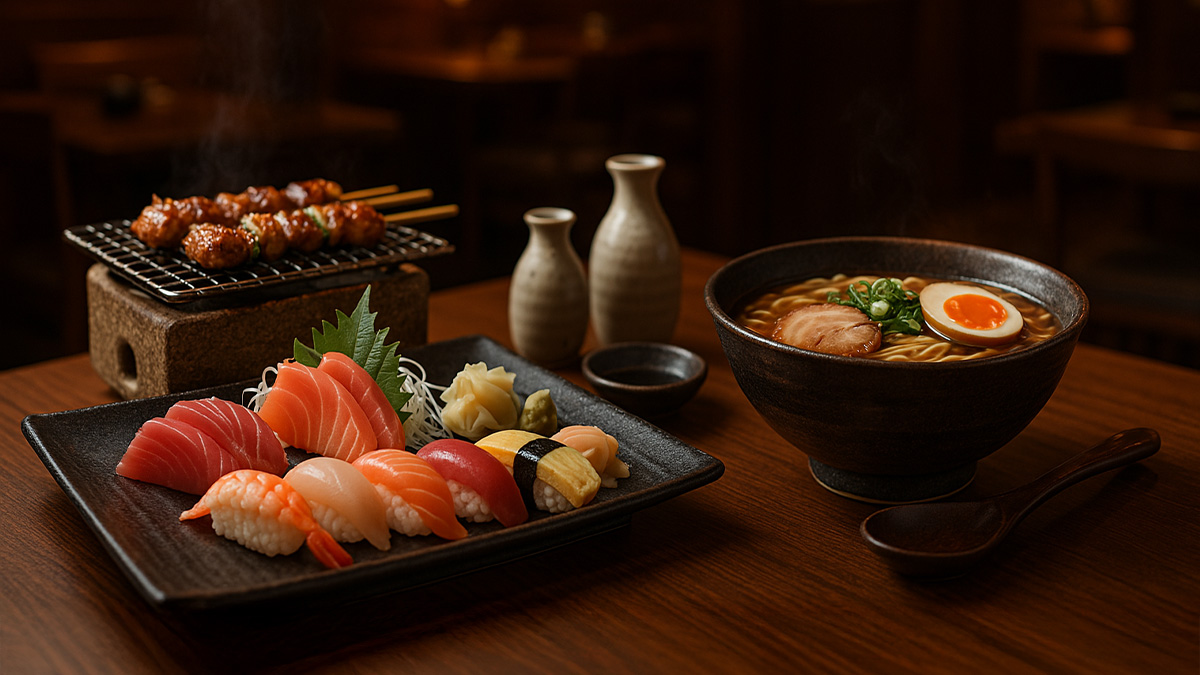
Japan, a fascinating archipelago rich in history and culture, is also renowned for its unique and refined cuisine. Beyond its magnificent landscapes and ancient traditions, Japanese food is a true invitation to travel, an exploration of flavors and textures that captivate palates worldwide. From delicate sushi and comforting ramen to savory yakitori, each dish tells a story, reflects a particular culinary technique, and is rooted in a well-established tradition. This article offers a journey to the heart of the origins of these popular Japanese dishes, revealing the secrets of their preparation and the evolution of their popularity through the centuries.
Sushi: From preservation to refined tasting
The history of sushi is surprisingly linked to fish preservation. Far from the elegant and sophisticated image we have today, sushi was born out of a practical necessity: preserving fish through fermentation in rice. This technique, originating in Southeast Asia, spread to China and then Japan, where it took root and evolved over time.
Narezushi: The ancestor of sushi. Narezushi is considered the oldest form of sushi. It consisted of wrapping fish (usually freshwater fish) in fermented rice for several months, or even years. The rice, which became acidic through fermentation, prevented the growth of bacteria and preserved the fish. Only the fish was eaten; the rice was discarded.
Nama-narezushi: A transition to rice tasting. Over time, the fermentation technique was modified. The fermentation time was reduced, allowing both the fish and the rice to be consumed. This evolution gave rise to "nama-narezushi," a dish where the slightly tangy rice began to be appreciated for its flavor.
Hayazushi: The rise of speed and freshness. The Edo period (1603-1868) marked a turning point in the history of sushi. The growth of cities and the increasing demand for quick and convenient meals led to the creation of "hayazushi," a type of sushi prepared with vinegared rice and fresh, unfermented fish. This type of sushi, quicker to prepare and fresher, was an immediate success.
The Nigirizushi: The modern form we know. Hanaya Yohei is credited with inventing "nigirizushi," the form of sushi we know today—a small ball of vinegared rice topped with a slice of fresh fish—in the early 19th century. This innovation revolutionized the world of sushi and contributed to its rapid popularization, particularly through the opening of sushi stalls on the streets of Tokyo.
Ramen: A noodle soup with diverse influences
Ramen, the iconic Japanese noodle soup, has a more recent and international history than sushi. Although considered a typically Japanese dish, ramen has Chinese origins and has been adapted and transformed over time to become the culinary specialty we know today.
The Chinese origin: The La Mian. Ramen is derived from "la mian," a Chinese noodle soup. The term "ramen" itself is a Japanese adaptation of the Chinese pronunciation of "la mian." "La mian" noodles were made by hand, by repeatedly stretching and folding the dough to create long, thin noodles.
Arrival in Japan: Adaptation and transformation. Ramen first appeared in Japan in the early 20th century, primarily in the Chinatowns of major cities like Yokohama and Kobe. Initially, ramen was considered a Chinese dish and was mainly consumed by Chinese laborers and students.
The rise after World War II: A popular and affordable dish. After World War II, ramen experienced a significant boom in Japan. Food shortages and the availability of American wheat contributed to the popularization of ramen, which became an affordable and nourishing dish. Numerous ramen stalls opened, offering various versions of the noodle soup.
Regional variations: A kaleidoscope of flavors. Over time, ramen has diversified into numerous regional variations, each with its own distinctive characteristics. Examples include tonkotsu ramen (made with pork bone broth) from Fukuoka, miso ramen (made with miso) from Hokkaido, shoyu ramen (made with soy sauce) from Tokyo, and shio ramen (made with salt) from Hakodate. Each region has developed its own recipes and ingredients, creating a true kaleidoscope of flavors.
Yakitori: Grilled skewers with universal appeal
Yakitori, which literally means "grilled bird," is a simple yet delicious dish consisting of skewers of chicken (or other meats and vegetables) grilled over hot coals. While seemingly simple, yakitori is a dish deeply rooted in Japanese culture, with a rich history and a wide variety of preparations.
Ancient history: From humble origins. The history of yakitori dates back to the Edo period (1603-1868), when poultry consumption was limited due to religious restrictions and economic considerations. Yakitori was then considered a humble dish, eaten mainly by the lower classes.
Popularization after World War II: A dish accessible to all. After World War II, increased poultry production and improved preservation techniques made chicken more accessible to everyone. Yakitori became a popular and affordable dish, eaten in izakayas (Japanese pubs) and street food stalls.
The diversity of kebabs: An exploration of flavors. Yakitori offers a wide variety of flavors and textures. You can find skewers made from different parts of the chicken (thighs, wings, skin, heart, liver), as well as vegetable skewers (leeks, mushrooms, peppers) and even meatballs. Each type of skewer is seasoned differently, with sweet, savory, or spicy sauces.
Sauces and side dishes: An essential finishing touch. Tare sauce, a sweet and savory sauce made with soy sauce, mirin (sweet rice wine), and sugar, is an essential element of yakitori. It's used to baste the skewers during cooking, giving them an irresistible umami flavor. Yakitori is often served with sansho pepper (a fragrant Japanese pepper), shichimi togarashi (a seven-spice blend), or shredded daikon radish.
The yakitori experience: A moment of conviviality. Enjoying yakitori is often synonymous with conviviality and sharing. Izakayas, where yakitori is served, are popular meeting places where people gather to drink beer, sake, and enjoy tasty dishes in a relaxed atmosphere.
Conclusion
Sushi, ramen, and yakitori are just a few examples of the richness and diversity of Japanese cuisine. Each dish has a unique story, from humble origins to worldwide popularity. Understanding the history and traditions behind these dishes allows you to appreciate their flavor and authenticity even more. Whether you are a sushi lover, Whether you're a ramen fan or a yakitori enthusiast, don't hesitate to explore the different regional variations and discover the secrets of Japanese cuisine. An unforgettable culinary journey awaits you!
Beyond their delicious taste, these Japanese dishes also reflect a rich culture and ancestral know-how. They embody the Japanese philosophy of harmony, balance, and respect for ingredients. By enjoying sushi, ramen, or yakitori, one savors not only a dish, but also a piece of Japanese history and culture.
So, the next time you feel like enjoying a Japanese dish, take the time to learn about its origins and preparation. You might discover some fascinating anecdotes and appreciate the complexity and subtlety of Japanese cuisine even more. Enjoy your meal!